

Pesticide Impacts to Children and Prevention
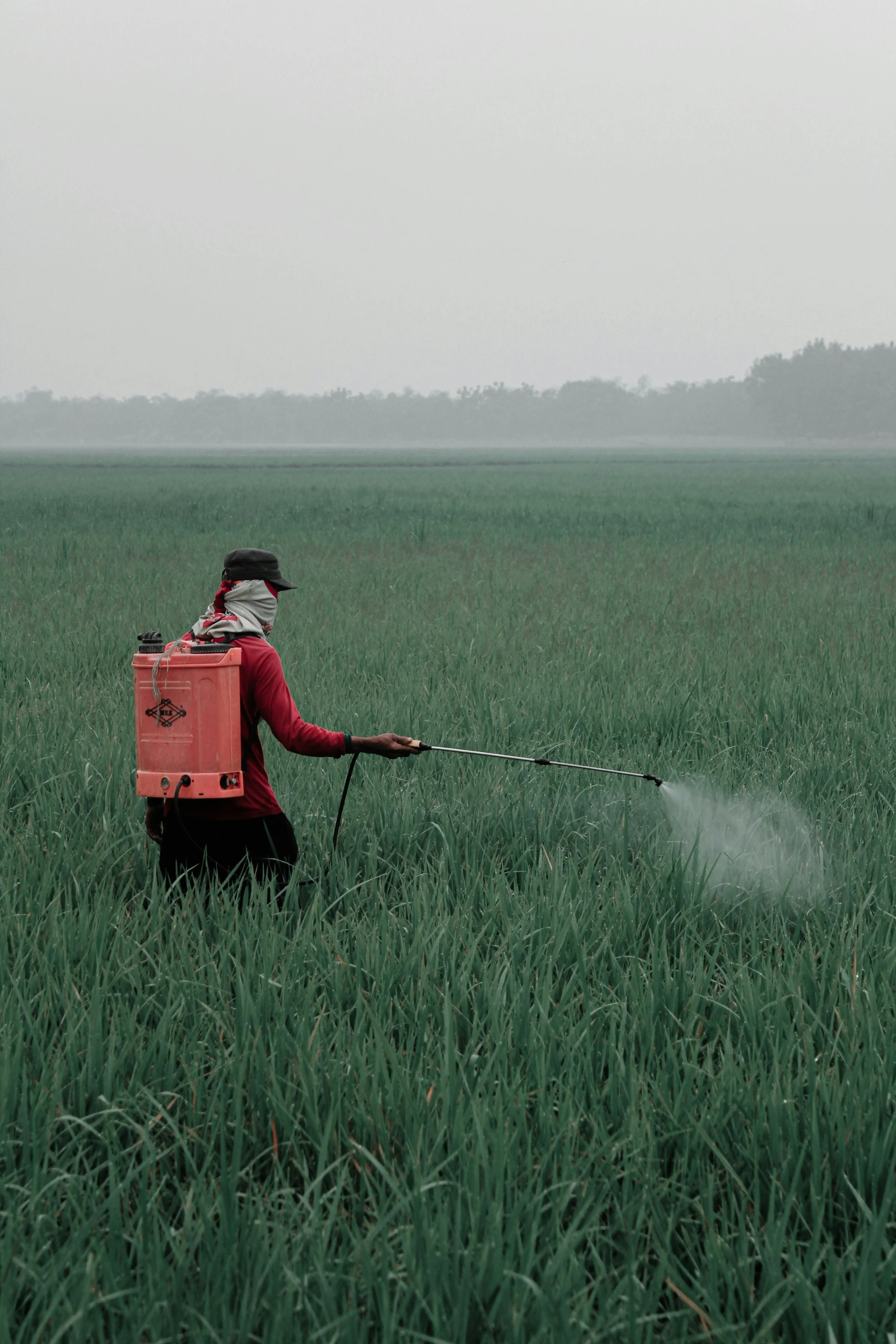
Pesticide exposure has long been a concern for pregnant embryos and young children, not only because these chemicals are toxic by design, but also because developing bodies are uniquely vulnerable to disruption.
EXPOSURE RISK
For fetuses, even small doses matter. The placenta does not serve as a reliable barrier to modern pesticides, and these compounds interact with hormonal pathways and neural development during critical windows. Research has repeatedly shown associations between prenatal pesticide exposure and outcomes such as low birth weight and impaired neurodevelopment. In a large U.S. cohort study, Medley et al. (2025) found that prenatal exposure to OPs, as indicated by maternal urinary DAP metabolite levels, was associated with lower fetal weight and head circumference, during the second trimester.
The Center for the Health Assessment of Mothers and Children of Salinas conducted a birth study of predominantly Mexican-American families living in California which studied biomarkers of organophosphate (OP) exposure during pregnancy and the children's IQ at age 7. Higher prenatal OP exposure was associated with lower full-scale IQ, and children in the highest exposure group scored, on average, about seven IQ points lower than those in the lowest exposure group. (Bouchard et al., 2011).
In an inner‑city cohort at the Columbia Center for Children’s Environmental Health, Rauh et al. (2011) assessed prenatal exposure to an OP insecticide measured in umbilical cord plasma. They reported that each standard‑deviation increase in prenatal OP exposure corresponded with declines of approximately 1.4 % in full‑scale IQ and 2.8 % in working memory at age 7 (Rauh et al., 2011).
Furthermore, Research from the EPA highlights that many pesticides have a shared mechanism of toxicity, acting on the same biological target, and combined exposure can cause more harm for the most vulnerable children. The EPA’s most recent guidance on cumulative risk assessment highlights that children and fetuses are often exposed to multiple pesticides through food, water, household dust, lawn applications, and even air drifting from nearby agricultural use (EPA, 2025).
Young children face additional risks because they breathe more air and eat more food relative to their body weight, and their detox systems, brains and organs are still continuing to develop. The margin of safety that appears acceptable for a single chemical often shrinks substantially when real-world mixtures are taken into account. This cumulative framework reflects a realistic understanding of how families encounter pesticides in everyday life and why protecting the most vulnerable requires a precautionary approach.
HOME PREVENTION
Alongside the valid concerns about pesticide exposure for children, we need to talk about what families can realistically do. Complete avoidance is impossible, but reduction is absolutely achievable, and even small shifts can meaningfully lower cumulative exposure.
One of the most effective starting points is food. Buying organic when possible, especially for produce that tends to carry higher residues, reduces dietary intake of multiple pesticides at once. Washing and peeling conventional fruits and vegetables helps, though it doesn’t remove systemic pesticides that are absorbed inside the plant. Supporting local farmers who prioritize organic, regenerative, or low-input practices also decreases exposure while encouraging healthier agricultural systems overall.
Within the home, choosing natural methods for lawn care and pest control limits residues tracked inside and reduces drift around children who play on grass or floors (Center for Environmental Health, n.d.). Improving ventilation during and after any chemical application and using simple cleaning practices like mopping and hand washing help reduce pesticide particles that accumulate in household dust (NC State Extension, 2024).
Natural lawn care can significantly reduce pesticide exposure for families, pets, and ecosystems. Research-supported methods include using organic compost to build healthy soil, leaving grass clippings on the lawn to return nutrients naturally, mowing grass at a taller height to suppress weeds, and watering deeply but infrequently to promote strong root growth (Eartheasy, n.d.; NC State Extension, 2024). When possible, experts also recommend pulling weeds by hand, using natural pre-emergent products such as corn-gluten meal, and adding native or mixed groundcover to reduce reliance on chemical herbicides (UW–Madison Botany Garden, n.d.). These practices support biodiversity, protect soil and water, and create a safer yard for children and pregnant people.
SUPPORTING DETOX
Helping the body process and eliminate exposures is another part of the picture. Detoxification does not mean extreme protocols; it means supporting the organs that already do this work by design. It’s important to have adequate minerals for hydration and nutrients that support the liver, antioxidant system, and natural detox pathways including leafy greens, berries, citrus, and healthy fats. Leafy greens and high-fiber foods support excretion pathways, while omega-3 fatty acids from foods like salmon, sardines, oysters, walnuts, and flaxseed may help reduce inflammation linked to toxic exposures (Oken & Bellinger, 2008).
Spirulina has been shown in human and animal studies to reduce oxidative stress and support detoxification pathways by increasing antioxidant enzymes and binding certain heavy metals, making it a useful for individuals with environmental exposures (Karkos et al., 2011). Arugula and other bitter leafy greens contain glucosinolates that enhance Phase II liver detoxification processes and increase glutathione activity, which assists the body in metabolizing and clearing pesticide residues and other toxicants (Traka & Mithen, 2009).
Research shows that cruciferous vegetables such as broccoli, kale, and cabbage can enhance the body’s ability to metabolize and eliminate environmental toxicants by strengthening glutathione production and Phase II enzyme activity (Egner et al., 2011). Foods rich in antioxidants and bioactive compounds such as citrus fruits, garlic, berries, turmeric, and green tea also support detoxification by modulating Phase I and Phase II liver enzyme pathways (Lampe, 2009).
Sweating through movement or sauna use encourages elimination through the skin. Consistent sleep allows the body to repair and support a healthy stress response that supports detoxification and lowers oxidative stress. Practices like yoga, meditation and pranayama can help also help trigger a relaxation response for better sleep. None of these strategies erase exposure entirely, but together they help the body keep pace with environmental demands.
INDUSTRIAL PREVENTION
Reducing pesticide risk also extends beyond personal habits. Many of the conditions that create high exposure from industrial agriculture can only be changed through collective action to shift regulatory frameworks. Supporting policies that limit the use of the most hazardous pesticides, advocating for buffer zones between agricultural fields and homes or schools, and staying engaged with local environmental boards or state regulatory processes all feed into long-term protection. Even small acts, such as choosing food brands that commit to reducing pesticide use or supporting organizations that work to reform pesticide policy, contribute to a larger shift. Political engagement does not need to be overwhelming; it can start with expressing concerns to local representatives or joining community groups that track environmental decisions in your area.
Furthermore, workers must remain responsible and liable for workplace safety and compliance with the Worker Protection Standard (WPS). Policies should support companies in funding inspections, personal protective equipment, and training. Enforcement paired with worker education reduces occupational exposures and downstream household contamination (Bohme, 2015). Improving state surveillance of pesticide poisoning and exposure by integrating biomonitoring, medical-record flags, and school-based screening would reduce undercounting and enable targeted interventions where exposures and harms are highest. The frameworks the EPA uses to assess exposure and cumulative risk provide a strong foundation, and incorporating these insights into routine pediatric developmental monitoring would help researchers better link OP exposure to health outcomes and justify policy interventions (EPA, 2025).
POLICY ADVOCACY
Through community organizing and advocacy, we can also shift narratives and influence policy. Successful precedents exist where community coalitions and legal advocacy have influenced pesticide policy, corporate practice, and housing protections. For example, Farmworker Justice and Earthjustice have litigated to strengthen application-exclusion zones and expand worker protections under the Worker Protection Standard (Farmworker Justice, n.d.; Earthjustice, 2021).
When these layers come together, practical reduction in daily life, gentle support for the body’s natural detox capacity, and participation in community or policy efforts, they form a more complete response to the risks. Protecting fetuses and children is not only about avoiding harm, but it is about creating healthier environments, stronger systems, and a culture that takes developmental vulnerability seriously.
If you feel inspired to take action, a meaningful place to start is contacting your local, state, or federal representatives to share concerns about children’s pesticide exposure and urge stronger regulation of toxic chemicals. You can also support organizations working on these issues such as Pesticide Action Network, Beyond Pesticides, Earthjustice, or Friends of the Earth which offer petitions, advocacy opportunities, and resources for getting involved.
Choosing organic food when possible, supporting regenerative farms, and using natural lawn-care methods at home also help reduce overall demand for harmful pesticides. Finally, staying informed and sharing reliable information with your community can amplify awareness and contribute to collective pressure for safer, more sustainable agricultural practices.
References
Bohme, S. R. (2015). EPA’s proposed Worker Protection Standard and the burdens of the past. International Journal of Occupational and Environmental Health, 21(2), 161–165. https://doi.org/10.1179/2049396714Y.0000000099
Bouchard, M. F., Chevrier, J., Harley, K. G., Kogut, K., Vedar, M., Calderón, N., … Eskenazi, B. (2011). Prenatal exposure to organophosphate pesticides and IQ in 7‑year‑old children. Environmental Health Perspectives, 119(8), 1189‑1195. https://doi.org/10.1289/ehp.1003185
Center for Environmental Health. “How to Keep Your Lawn Happy Without the Use of Harmful Chemicals.” https://ceh.org/yourhealth/lawn-care-without-harmful-chemicals/ (n.d.).
Eartheasy. “Natural Lawn Care.” https://learn.eartheasy.com/guides/natural-lawn-care/ (n.d.).
Earthjustice. (2021). Organophosphate pesticides in the United States. https://earthjustice.org/feature/organophosphate-pesticides-united-states
Egner, P. A., Chen, J. G., Wang, J. B., Wu, Y., Sun, Y., Lu, J. H., Zhu, Y. R., Zhang, Y. H., Qian, G. S., & Kensler, T. W. (2011). Bioavailability of sulforaphane from broccoli sprout beverages: Implications for cancer chemoprevention. Cancer Prevention Research, 4(3), 384–395. https://doi.org/10.1158/1940-6207.CAPR-10-0296
EPA. (2025, March 6). Guidance on cumulative risk assessment of pesticide chemicals that have a common mechanism of toxicity. https://www.epa.gov/pesticide-science-and-assessing-pesticide-risks/guidance-cumulative-risk-assessment-pesticide
Farmworker Justice. (n.d.). Worker safety program: Pesticides. https://farmworkerjustice.org/en/programs/worker-safety
Karkos, P. D., Leong, S. C., Karkos, C. D., Sivaji, N., & Assimakopoulos, D. A. (2011). Spirulina in clinical practice: Evidence-based human applications. Evidence-Based Complementary and Alternative Medicine, 2011, 1–4. https://doi.org/10.1093/ecam/nen058
Lampe, J. W. (2009). Interindividual differences in response to plant-based diets: Implications for cancer risk. American Journal of Clinical Nutrition, 89(5), 1553S–1557S. https://doi.org/10.3945/ajcn.2009.26736G
NC State Extension. (2024) “Organic Lawn Care: A Guide to Organic Lawn Maintenance and Pest Management for North Carolina.” https://content.ces.ncsu.edu/organic-lawn-care-a-guide-to-organic-lawn-maintenance-and-pest-management
Oken, E., & Bellinger, D. C. (2008). Fish consumption, methylmercury and child neurodevelopment. Current Opinion in Pediatrics, 20(2), 178–183. https://doi.org/10.1097/MOP.0b013e3282f4f97b
Rauh, V. A., Arunajadai, S., Horton, M., Perera, F. P., Hoepner, L., Barr, D. B., & Whyatt, R. W. (2011). Seven‑year neurodevelopmental scores and prenatal exposure to chlorpyrifos, a common agricultural pesticide. Environmental Health Perspectives, 119(8), 1196‑1201. https://doi.org/10.1289/ehp.1003160
Traka, M. H., & Mithen, R. F. (2009). Glucosinolates, isothiocyanates and human health. Phytochemistry Reviews, 8(1), 207–229. https://doi.org/10.1007/s11101-008-9103-7
UW–Madison Botany Garden. (n.d.) “Organic Lawn Care.” https://livingcollection.botany.wisc.edu/home-2/botany-garden/organic-lawn-care/
